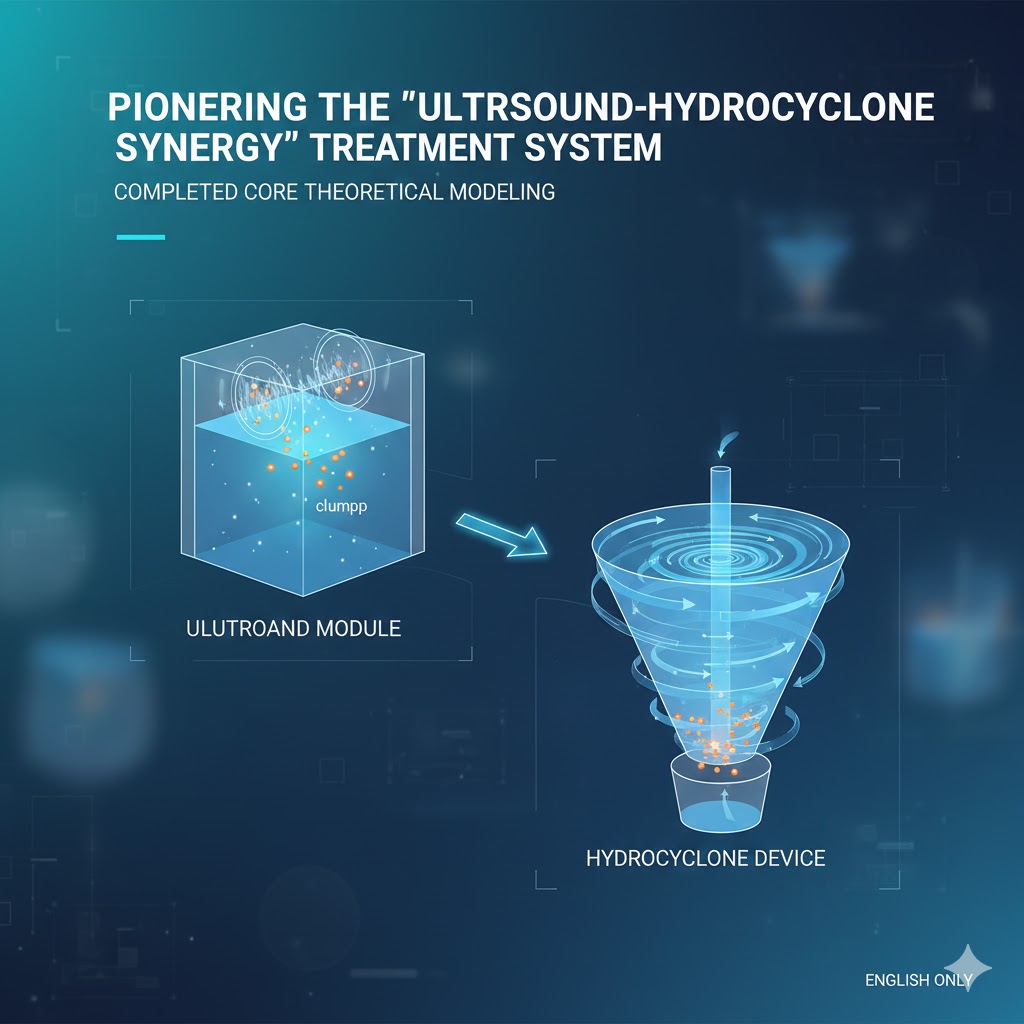
Step 1: Theoretical Modeling and Initial Feasibility Verification
Core Breakthrough: We pioneered the "Ultrasonic-Cyclonic Synergistic" treatment system and completed its core theoretical modeling.
Key Content:
The system's feasibility was initially verified at the laboratory scale.
Removal efficiency for various common microplastics (such as PP, PE, PVC) exceeded 87%.
The fundamental technical approach of "ultrasonic-induced agglomeration + cyclonic separation" was established.
1
Step 2: In-Depth Performance Validation Under Multiple Scenarios
Core Task: Comprehensive testing of system performance and adaptability in simulated real water environments.
Key Content:
Multi-Environment Validation: The system demonstrated stable performance across waters with different turbidity, microplastic concentrations, and particle size distributions.
Mechanism Confirmation: The ultrasonic pre-treatment unit effectively transformed hard-to-capture micron-sized particles into aggregates easier to separate.
Key Challenge Breakthrough: With microbubble synergy, the hydrocyclone achieved efficient capture of microplastics across a wide density spectrum, showing particularly improved removal efficacy for lightweight microplastics (e.g., PE, PP).
2
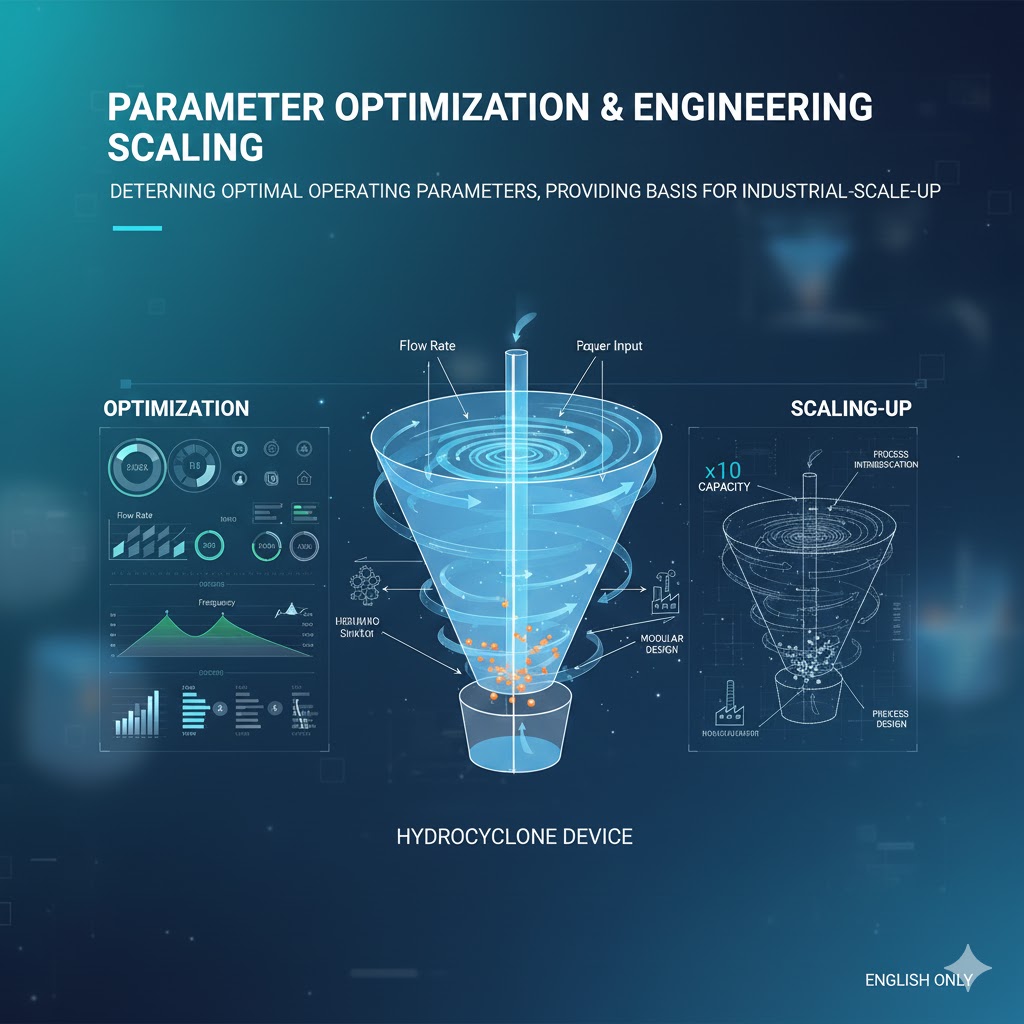
Step 3: Parameter Optimization and Engineering Calibration
Core Work: Determining the optimal operating parameters to provide a basis for engineering scale-up.
Key Content:
Optimized ultrasonic power (within the 20-40 kHz range).
Determined the optimal hydraulic retention time.
Established the core operating parameter system.
Accumulated critical data for scaling from laboratory to engineering dimensions.
3
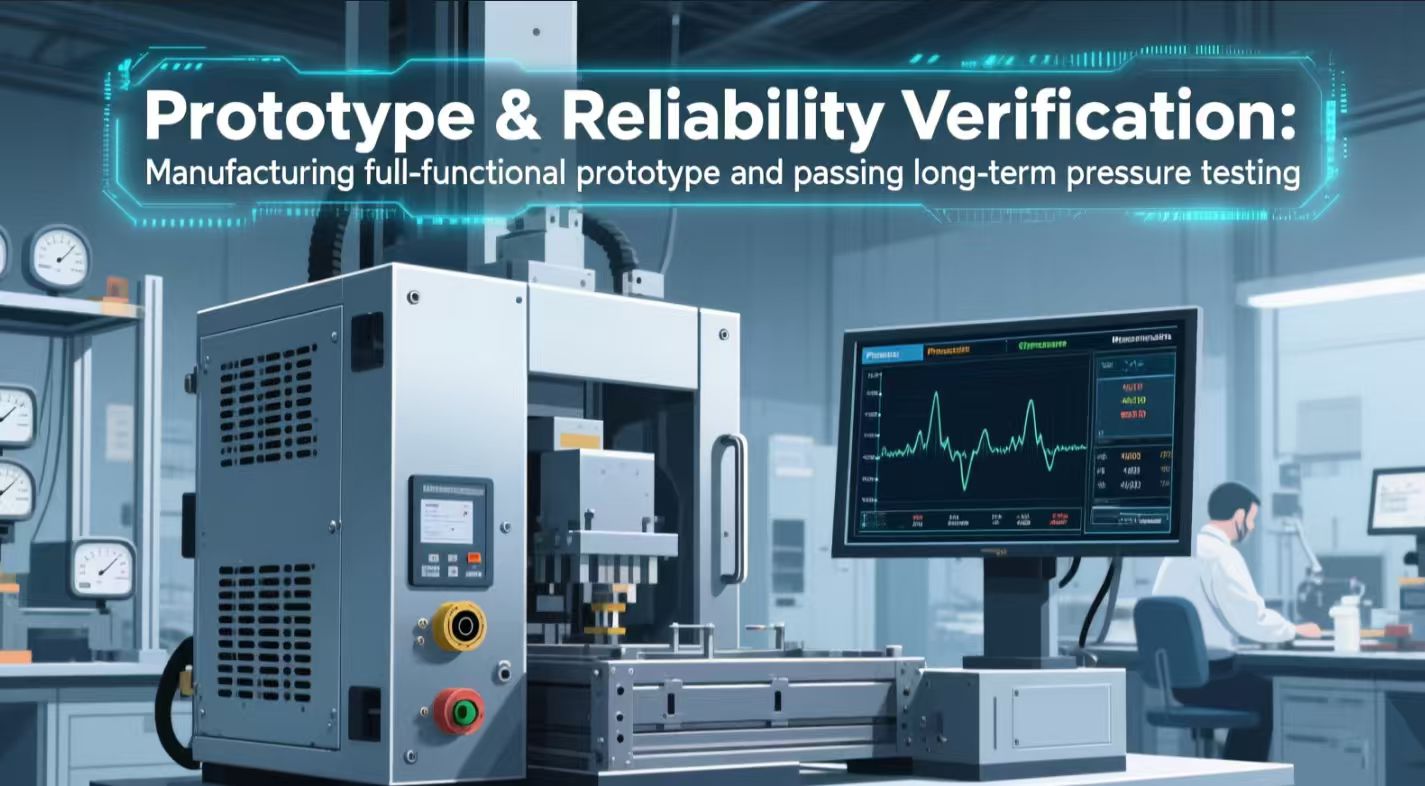
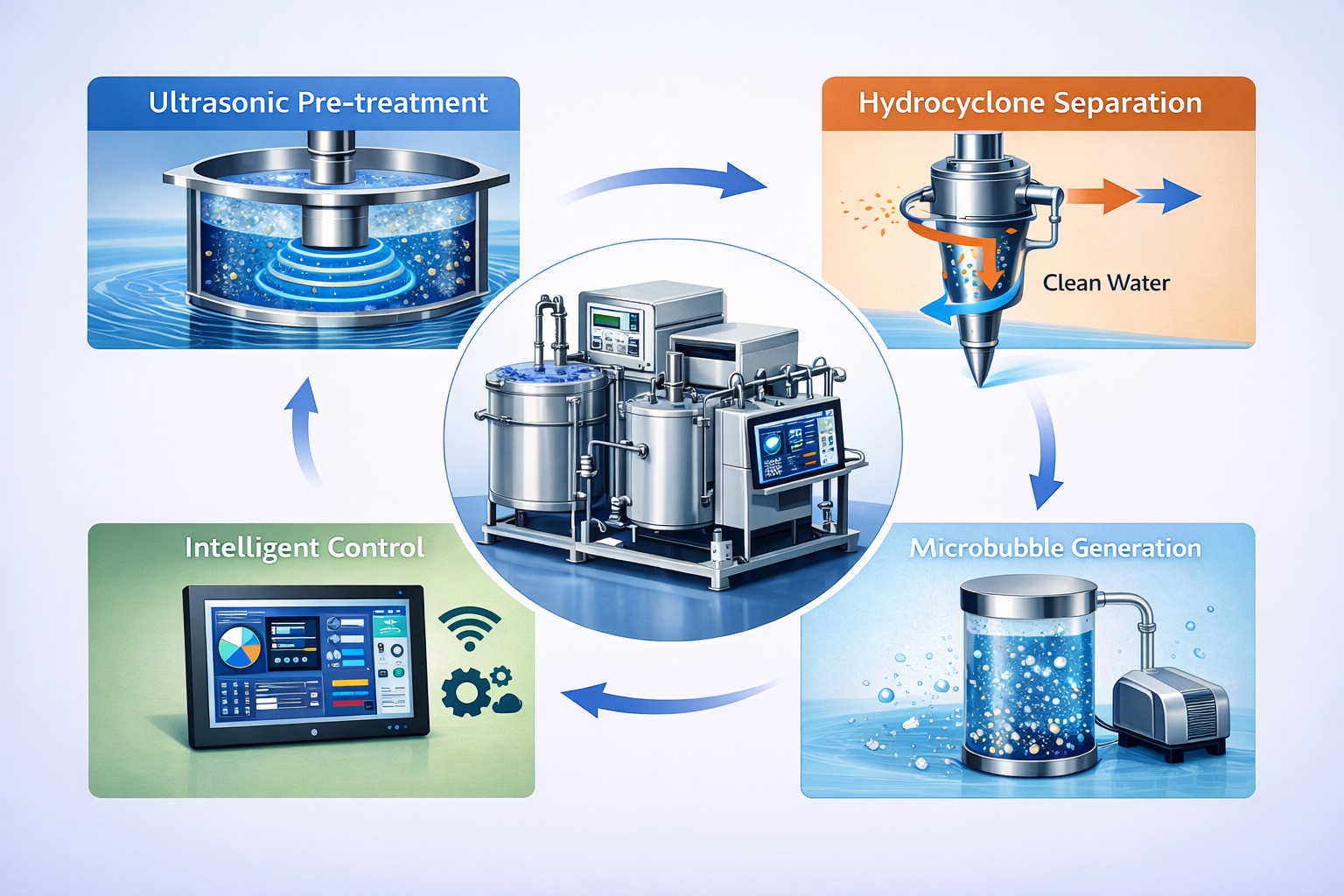
Step 4: Engineering Prototype and Reliability Verification
Core Achievement: Manufacturing a fully functional prototype and passing long-term stress testing.
Key Content:
Prototype Integration: Integrated four core modules: ultrasonic pretreatment, cyclonic separation, intelligent control, and microbubble generation.
Prototype Functionality: All core functions were successfully implemented.
Performance: Processing capacity of 0.5-1 m³/h, with microplastic removal rate consistently above 90%.
Reliability Verification: Accumulated continuous operation for over 30 days, completing hundreds of treatment cycles, successfully passing multiple simulated water quality fluctuations and shock load tests.
Intelligent Stability: The built-in control system enables rapid adaptive adjustment to maintain stable operation.
4